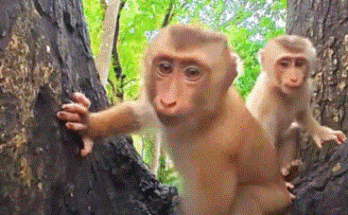
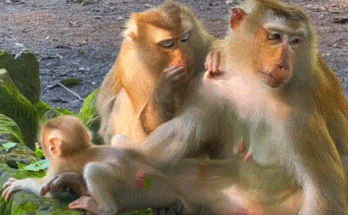
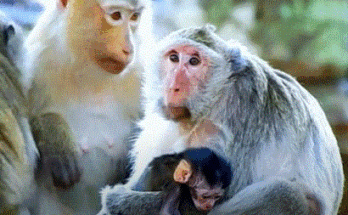
The morning sun had just begun its slow climb over the ancient spires of Angkor Wat, painting the moss-covered stones with a warm, golden glow. The forest was waking—parakeets screeched in the canopy, cicadas hummed like distant engines, and the air was thick with the scent of damp earth after the night’s rain.
I was wandering along one of the lesser-known paths, far from the bustling tour groups. Here, the jungle seemed to breathe differently—slower, deeper. My footsteps were softened by fallen leaves, and the only company I expected to keep was the occasional butterfly or a flicker of movement in the branches.
That’s when I saw him.
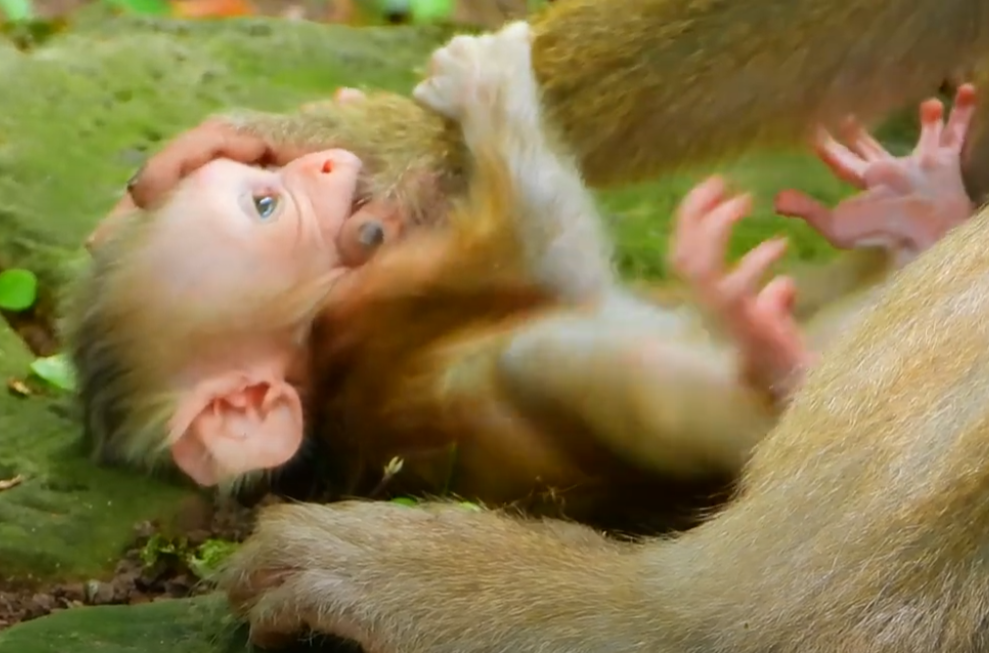
A tiny macaque, no bigger than a football, sat near the roots of an enormous strangler fig. His fur was still that soft baby brown, slightly ruffled, and his eyes—oh, his eyes—held a pleading that stopped me in my tracks. He clung to a vine with one hand, his little body swaying, making soft chirping noises that barely carried through the humid air.
I looked around for his mother, half-expecting her to leap down in protest at my presence. But the clearing was still. In the distance, a few older monkeys chased each other through the branches, but none seemed to claim him.
The baby spotted the water bottle slung at my side. At first, he tilted his head, curious. Then, with surprising speed, he toddled forward, tiny feet pressing into the damp soil. He stopped just a step away from me, raised his little arms, and made a sound I can only describe as the gentlest “please” I’ve ever heard.
I knelt slowly, heart pounding, aware of the sacredness of this moment. I’d brought a small container of milk for a different purpose—a gift for a monk who sometimes fed temple animals—but as I looked at this hungry baby, all thoughts of plans and propriety faded.
I poured a little into the cap of the bottle and slid it toward him.
At first, he sniffed at it, unsure. Then, as if a switch flipped, he gripped the cap with both hands and drank in quick, greedy sips, closing his eyes with every swallow. Milk dribbled down his chin, but he didn’t stop. The forest seemed to fall silent, the distant tourist chatter fading into the background.
In that space, it was just him and me—a wild little soul trusting a stranger.
When he finished, he sat back, licking the inside of the cap with determination. Then, to my astonishment, he reached forward and placed one tiny hand on my knee. It wasn’t a grab, not a demand—just a touch. A thank you.
My throat tightened, and I had to blink hard to keep my eyes from flooding. I wanted to scoop him up, protect him from every danger the wild might hold, but I knew this wasn’t my world. He belonged here—in the shadow of these temples, in the arms of the forest that had raised him long before I arrived.
A rustle in the leaves made him turn his head. A larger female monkey emerged from behind the fig tree—his mother, no doubt. She looked at me, then at him, and I swear there was a flicker of acknowledgment in her gaze. With a soft grunt, she called him, and without hesitation, he bounded toward her.
But before disappearing into the green, he glanced back once, eyes locking with mine, as if sealing the memory between us.
I sat there long after they vanished, the empty milk cap still in my hand, feeling the forest settle again around me. I’d come here to witness history carved in stone, but I’d found something older, something more powerful—an unspoken bond between two beings who had nothing in common but a shared moment of kindness.
And maybe, I thought, that’s the truest story Angkor Wat could tell.