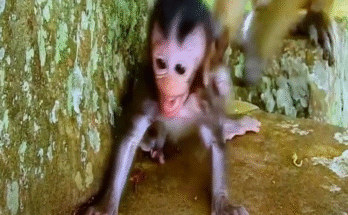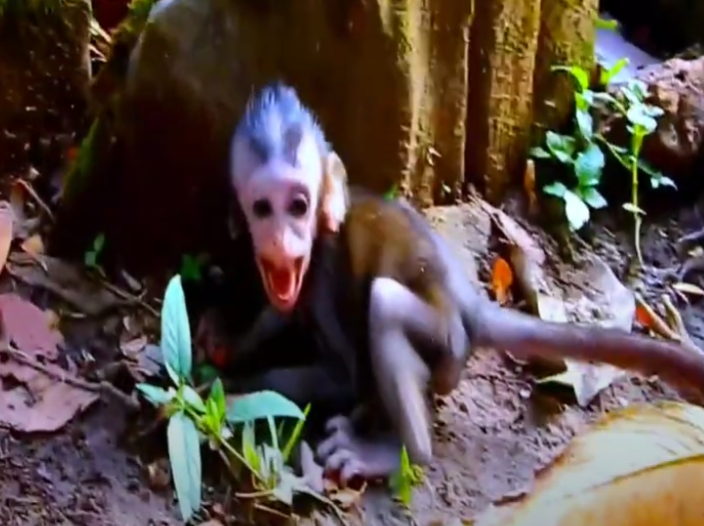
It was early morning, the sun casting a golden hue over the temple ruins. The air was thick with humidity, and the usual hum of tourists had not yet begun. Amidst the ancient stones, a mother macaque moved cautiously, her baby clinging to her side. Their bond was evident, a silent testament to the strength of maternal love in the wild.
But this morning was different.
As the pair navigated the temple grounds, a group of individuals approached them, cameras in hand. They were YouTubers, seeking to capture moments that would garner views and, ultimately, revenue. The mother macaque, sensing the intrusion, hesitated. Her protective instincts flared.
Without warning, one of the individuals reached out, grabbing the baby monkey. The infant screeched in terror, its tiny body trembling as it was held aloft. The mother’s desperate cries echoed through the temple, a sound that would haunt anyone who heard it.
The scene was chaotic. The baby monkey struggled, its cries piercing the morning air. The mother lunged, her maternal instincts overriding her fear, but she was held back by the crowd. The YouTubers, oblivious to the emotional turmoil they were causing, continued to film, chasing the pair as they tried to escape.
This wasn’t an isolated incident. Over the past few months, reports have surfaced of similar occurrences. YouTubers have been seen feeding and capturing wild macaques, disrupting their natural behaviors and causing distress. The Cambodian authorities have taken notice, with APSARA, the agency overseeing the Angkor Archaeological Park, launching investigations into these practices .
The emotional toll on the animals is undeniable. Monkeys, known for their complex social structures and deep familial bonds, are particularly vulnerable to such disturbances. The trauma inflicted can have lasting effects, not just on the individuals involved but on the entire troop’s dynamics.
But it’s not just the animals who suffer. Tourists, too, are at risk. As the macaques become accustomed to human interaction, they may approach visitors more frequently, leading to potential conflicts. The balance between preserving wildlife and maintaining a safe environment for tourists is delicate, and incidents like these threaten to tip that balance.
In the face of such challenges, it’s crucial to remember the importance of ethical wildlife interaction. Animals, especially those in their natural habitats, deserve respect and space. Capturing moments of wildlife should never come at the expense of their well-being.
As we reflect on this incident, let it serve as a reminder of the profound impact our actions can have on the world around us. The cries of a baby monkey are not just sounds—they are calls for compassion, understanding, and change.