I’ll never forget the dawn air in the Angkor Wat forest—the wet earth, the golden sunlight filtering through ancient spires, and the hushed cries of the wild. That morning, I followed a troop of macaques along winding temple paths, breath held for something extraordinary. Then I saw her.
She was perched on a moss-clad temple ledge, her coat dull with stress. In her arms she held a trembling, starving infant. The baby’s eyes—so small, so desperate—searched her for a sign. Hunger made his voice a wisp of a cry, pleading. I felt it in my chest, too—a yearning for that helpless creature.
But she didn’t lean in. Instead, she turned away, head lowered, as though ashamed. My heart thundered. A mother’s instinct to nurture seemed to flicker—then vanish. For a moment, time froze in the mossy shadow of Angkor.
In the silence that followed, I stepped closer, breath shallow. The baby monkey reached out anyway, spine arching, vulnerable. She looked at him, then backwards, as though she remembered some pain. I won’t claim to understand what drove her—maybe hunger, illness, or a memory of loss—but the grief in that space felt ancient.
I sat nearby on a warm stone, heart aching, watching them. Above, jungle birds called, and distant temple bells chimed in the morning hush. I imagined her memories—the troop she once belonged to, the kin she lost, the hunger that twisted her instincts into rejection. And I thought of the little one, eyes shining through tears, wanting love—wanting safety—in the place most sacred.
And I wept.
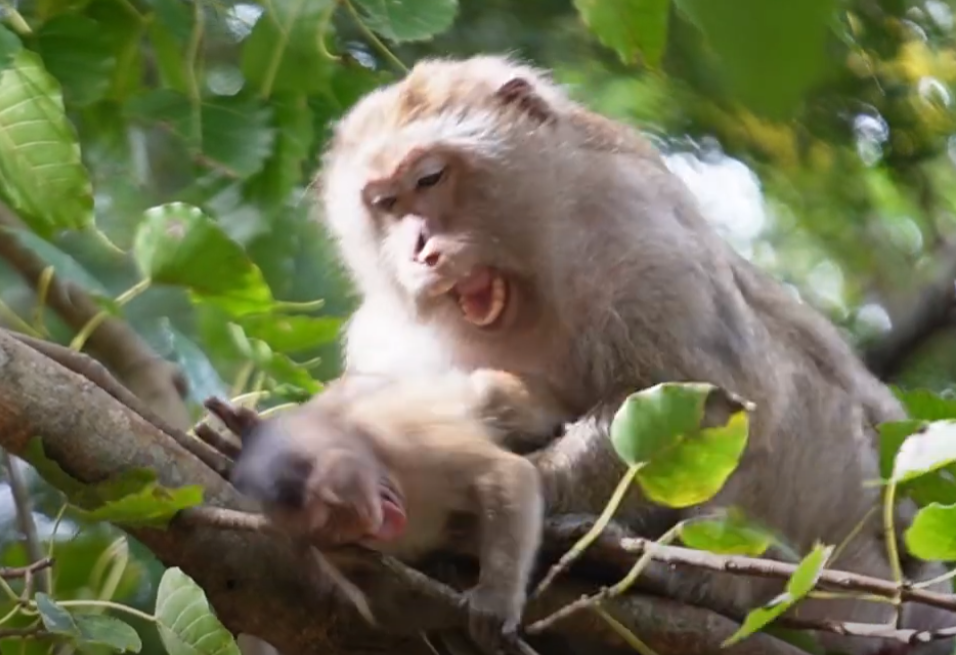
Then, as if drawn by fate, another female monkey appeared—softer eyes, a gentler posture. A nod, and she walked over, embracing the baby with quiet authority. He nestled into her chest. The rejected infant’s tears stilled. The jungle exhaled.
I had no choice but to place my hand over mine—awed and broken at the same time.
The forest, ancient and wise, had shown me both heartbreak and healing. Under the shadow of centuries-old stones, I witnessed that love can falter… but also, that kin can heal what grief breaks.