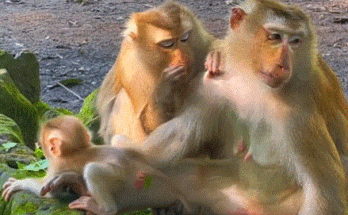
I will never forget the moment I heard those screams. It was early morning beneath the towering roots of Angkor’s sacred stones. I’d come seeking solace in nature’s whisper—but instead, I stumbled into a raw, primal plea.
Amid scattered sunlight through ancient ruins, a baby monkey’s voice ripped the quiet. It was terrifying—not in volume, but in the hopeless tremor that laced every note. My chest clenched when I saw her: a frail infant perched dangerously on a temple ledge, no mother in sight, vulnerability personified.
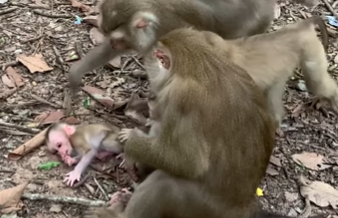
The forest seemed to recoil from that sound, as if the ancient guardians themselves had paused in horror. I crouched low, trying not to frighten anything more. Only her voice echoed—weak, urgent.
In moments like these, your senses converge: you see the quiver in her fur, hear the forest’s hush, feel the stones beneath your palms as ancient as the cry. I thought: this is survival. This is fear. And this… is heartbreak.
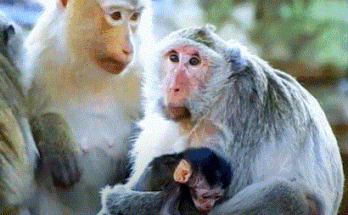
Time warped. Then, through moss-heavy trunks, her mother surged into view—coat matted, movements urgent. She hesitated at first, fear mirrored in her eyes. But when her baby screamed again, the bond shattered any hesitation. In a heartbeat, she climbed, leapt, gathered her baby into desperate arms.
Their bodies connected in a fragile, miraculous embrace. The baby’s chest, once convulsing, relaxed. The mother held her close, gently grooming the fur on her back. There was pain in their flight, but also an undeniable, fierce love.
I stood there, tears blurring the stones and roots, struck by how raw and deep that love is—even in the wildest places of our world.
Later, I crept away, leaving them cradled between ruins and roots. But I carry that echo of fear and rescue in my chest—an ancient sound that taught me how fragile and powerful life can be, in equal measure.