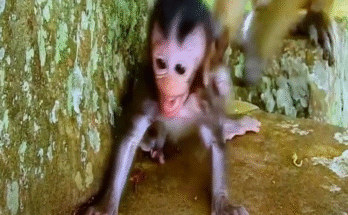
In the vast green canopy of the jungle, a heartbreaking moment unfolds—one that stuns even the most seasoned wildlife observers. A newborn baby monkey, barely able to open its eyes, is left alone, clinging to a tree branch. Its soft cries echo faintly as its mother moves away, vanishing into the thick foliage. No glance back. No hesitation.
This is not just nature being harsh. This is raw, emotional reality. A fragile life abandoned in a world full of threats. And sadly, this scene plays out more often than most people imagine.
A Newborn’s First Moments—Alone
The baby, still pink and trembling, had only recently entered the world. In primate society, these first few days are when the bond between mother and infant is most critical. The newborn depends entirely on the mother for protection, warmth, food, and even movement.
But in this rare and chilling moment, that bond is broken.
Captured on video, the mother monkey appears distracted at first. Then, in a startling move, she climbs down the tree—leaving her newborn behind. She pauses only briefly before joining the rest of the troop, who show no interest in the abandoned infant. The baby squeals, reaching out with tiny, weak limbs, but no help comes.
The jungle, vibrant and alive, becomes a place of terrifying silence for this helpless soul.
Why Would a Mother Abandon Her Baby?
To human eyes, this seems unthinkable. But in the wild, abandonment—while tragic—is a known survival behavior. Wildlife experts point to several possible reasons:
- Injury or illness: If the mother senses her baby is sick or too weak to survive, she may make the heartbreaking choice to leave it behind.
- First-time mothers: Young, inexperienced mothers may become overwhelmed or confused, unsure how to care for their newborns.
- Stress and danger: The presence of predators, aggressive troop members, or food scarcity can push mothers to abandon infants to save themselves.
- Social rejection: In hierarchical monkey troops, low-ranking mothers sometimes face pressure or rejection, which may affect their ability to nurture and protect their babies.
None of these reasons make the image easier to accept. But they do reveal the harsh reality of jungle life—where survival is not always guaranteed, and love must often compete with fear.