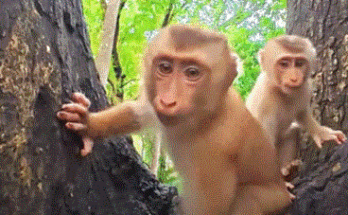
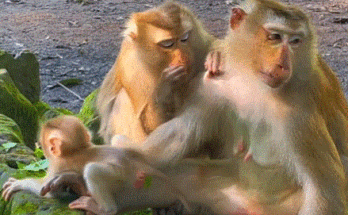
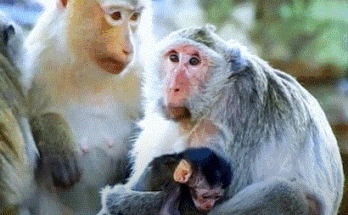
Walking through the Angkor Wat forest at dusk is like stepping into another world. The air hangs heavy with the scent of moss and damp earth, cicadas hum their evening chorus, and the last traces of sunlight flicker across ancient stones. I had taken this path countless times, but on that evening, something stopped me in my tracks—a sound that didn’t belong.
At first, I thought it was the cry of a bird. But then I heard it again—sharp, trembling, and heart-wrenchingly small. It was the cry of a baby.
I pushed through the brush, my heart already racing, until I found the source. Wedged between two massive stone slabs, covered in centuries of moss, was a baby lynx. Its tiny head was jammed in a crevice, eyes wide with terror, little paws clawing desperately at the air.
For a moment, I froze. The great ruins of Angkor seemed to loom higher, the forest itself holding its breath. Here was this wild, untamed creature—so strong in spirit, yet so helpless in that instant.
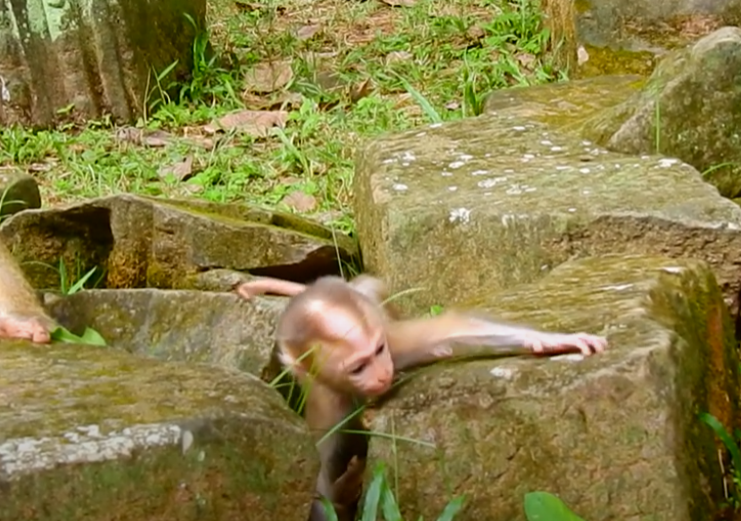
The Struggle in the Twilight
I dropped to my knees beside the lynx. Its fur was damp with sweat and dirt, whiskers trembling with every labored breath. I whispered softly, “I’ve got you… don’t be afraid,” even though I knew it couldn’t understand my words.
My fingers probed the rough stone, searching for any way to widen the gap. Each attempt was a delicate balance: too much force could hurt the cub, too little and it would remain trapped. The lynx whimpered, its cries echoing against the ancient walls, each sound cutting straight through me.
The forest seemed to join in the struggle. Bats stirred overhead, leaves rustled nervously, and the fading light painted the ruins in haunting shades of gold and violet. It felt as though time itself had paused, waiting to see if compassion or despair would win.
A Race Against Darkness
As night crept closer, the urgency grew. I could feel the cub weakening—its struggles softer, its cries fading. Sweat poured down my temples, my hands raw from the stone’s jagged edges.
Then, with one final, desperate effort, I shifted the rock just enough. The lynx’s small head slipped free, and the cub tumbled into my arms. For a heartbeat, it didn’t move. My chest tightened with fear—had I been too late?
But then, a faint shiver. A small gasp. The baby lynx lifted its head and looked at me with wide, glistening eyes.
Relief washed over me so powerfully that I felt tears sting my own. In that quiet moment, surrounded by the echoes of ancient civilizations and the hush of the jungle night, a fragile life had been given a second chance.
Freedom at Dawn
I set the cub gently on the ground. Its legs wobbled at first, but soon it found strength. It glanced back at me one last time, as if to say thank you, before padding slowly into the undergrowth. The forest seemed to sigh with relief, cicadas resuming their song, the rhythm of life returning.
By the time dawn broke, painting Angkor’s towers in pink and gold, the lynx was gone—back to the wild where it belonged. But its memory lingered. For me, that twilight rescue became a reminder of the delicate thread that connects us all—human, animal, and the ancient earth beneath our feet.
In saving that lynx, I realized something profound: sometimes the smallest lives carry the greatest lessons. They remind us of resilience, of compassion, and of the quiet power of hope.