I still feel the morning mist on my skin, and I swear I can hear the echo of that moment—Luno’s soft plea carried through the towering roots of Angkor’s ancient trees, as he whispered, “No, Luno… please don’t play bad on Lily, because Lily is small… you see Lily cry.” I didn’t expect to become part of something so raw, so tender, but when it happened, I knew Angkor Wat had shared its oldest secret with me.
It was near dawn, the sun still a faint glow behind dense foliage. I had wandered off the main trail, drawn by the soft melody of a voice—equal parts worry and warmth. The forest was ancient, sacred: grey stone temples balanced between earth and sky, lichen draped like old shawls, roots weaving through crumbling corridors. Yet, in that wild hush rose a modern, fragile heartbeat: Luno, quietly, pleading.
I didn’t see Lily at first. Just a small figure crumpled near a moss-covered temple base, tears sparkling like dew on tiny cheeks. Luno — steady, gentle, torn with regret — knelt beside her. I watched, breath held, feeling my heart throb as though it belonged to them. The clearing felt charged, as if Angkor itself inhaled.
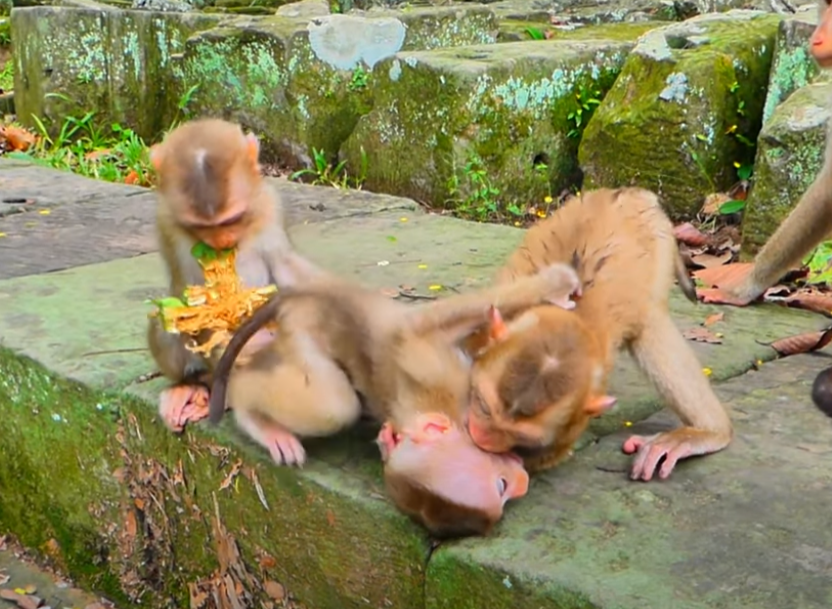
Luno reached out—slow, careful—his fingers brushing Lily’s hair away. “I’m sorry,” he murmured. “I didn’t mean to scare you.” No defense, no frustration. Just a desperate care that echo-rumbled off sandstone pillars. Lily sniffled, voice cracked: “You… you humiliated me.” And then silence hung until she whispered, “But… I’m small.” That, simple as rainfall, hit me harder than I expected. I realized how often our little ones—fragile humans we thought would bounce back—carry weight we forgot to measure.
I had come seeking the grandeur of Angkor Wat—its sunlit terraces, its god-guarded walls—but this moment offered something deeper: vulnerability, empathy, the way ancient stones observe and cradle the most delicate human ache. I wanted to stay, to remain invisible, to let time slow. Every breath tasted sacred.
I slipped closer, careful not to intrude, and pulled out my notebook. My hands trembled—I didn’t want words to cheapen what I was witnessing. Yet, I sketched the way Luno’s shoulders shook with quiet apology. I wrote how Lily’s tears pooled inside her small palms. I wrote how the stones, weathered and worn, seemed to lean forward, listening.
“Lily,” Luno said again, soft as moss, “I’ll never make you cry again.” Her tears paused. “Promise?” she asked. “Promise.” Beneath those ancient canopies, a promise felt like a vow to the forest itself. The way she looked up—trust reborn—made something in me weep.
I wanted U.S. readers—your friends, your family—to feel this echo. To remember: even when everything looks fixed, someone little near you might need gentleness you didn’t know you could give. And sometimes, a place as old as Angkor reminds us how fleeting our patience is—and how powerful forgiveness can be.
I stayed until the light warmed the temple stones. Luno helped Lily to her feet and offered his hand. Lily wiped her eyes and smiled—not wide, but real. A bond re-formed amid living history. I backed away, carrying that memory like a glyph etched on my heart.