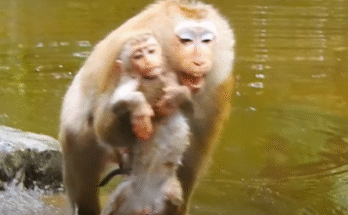
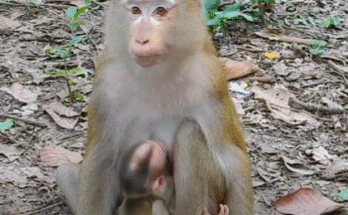
Among the sprawling ruins and sacred spires of Cambodia’s Angkor Wat, the sounds of history echo through the trees. Tourists wander the ancient pathways, cameras in hand, capturing the serene beauty and playful wildlife. But behind the smiles, laughter, and viral videos, a hidden tragedy quietly unfolds.
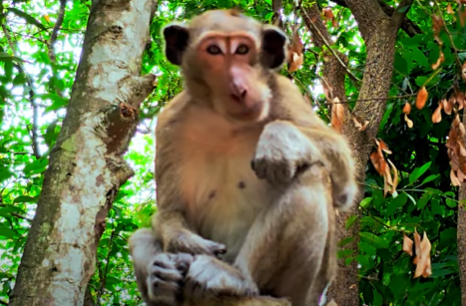
I first spotted a baby macaque near one of the sun-drenched temple walls. Its fur, soft and golden in the sunlight, seemed almost unreal against the weathered stone. But it wasn’t the playful curiosity I expected from a young monkey. Its eyes were wide, glistening with fear and uncertainty. It trembled as it clung to a small ledge, and I realized, with a sinking heart, that something—or someone—had hurt it.
Many of Angkor Wat’s baby monkeys live in conditions that no child should ever know. They are taken from their mothers, forced to endure the hands of strangers, and made to perform tricks or pose for cameras. While tourists delight in their cute antics, few realize that each smile captured for social media may mask pain, confusion, and loneliness.
I watched as a small group of visitors approached, eager for the perfect photo. The baby monkey recoiled, unsure how to escape. One young girl reached out, brushing its fur, and the monkey’s tiny body stiffened in fear. It reminded me how fragile innocence is, and how easily it can be overshadowed by exploitation.
The heartbreaking part is that this suffering is entirely preventable. Social media’s appetite for viral content has created a market for these baby monkeys, incentivizing humans to capture, manipulate, and profit from them. The cute videos we click “like” on can mask moments of pain, moments the monkeys will carry forever.
But there is hope. Conservation groups are working tirelessly to rescue abused animals, provide them with proper care, and educate tourists about responsible wildlife interactions. Awareness is key. By sharing the hidden stories behind these adorable faces, we can shine a light on the unseen suffering and advocate for change.
That day, as I left the temple, the baby monkey’s gaze followed me. It wasn’t just fear—it was a silent plea. A plea for protection, for freedom, and for a world where no monkey would have to tremble for the amusement of strangers. In those eyes, I saw a truth that is easy to overlook but impossible to ignore: innocence, when exploited, speaks volumes in silence.
We can honor that silent plea. By spreading awareness, supporting wildlife protection, and making conscious choices about the content we consume, we can ensure that Angkor Wat remains not just a place of wonder for humans, but a sanctuary for its wildlife. The next time we see a cute monkey video online, let us ask: what story lies behind the smile?